Vino Cotto

FRAMES 9_risultato
Vino Cotto

Harvest

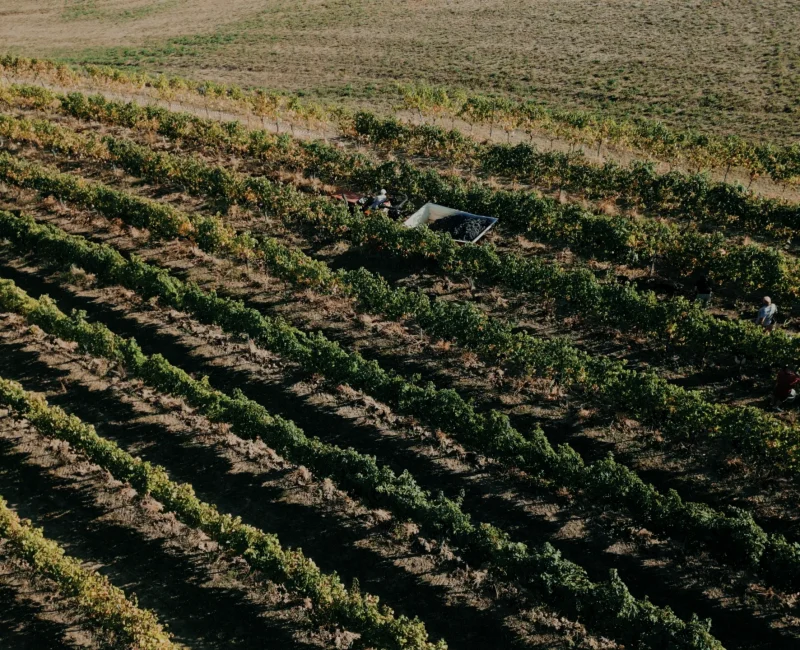
With the arrival of September, one of the most anticipated moments of the year begins: the grape harvest. Crates, tractors, and pruning shears come into action to gather the fruits of the land, in an atmosphere that brings together work, tradition, and conviviality.

It is a moment shared with family and friends, made up of age-old gestures, smiles, and collaboration. The harvest is carried out strictly by hand, row after row, across approximately 1.4 hectares of vineyard.

The grapes, including Trebbiano, Montepulciano, Sangiovese, Maceratino, and Merlot, are then transported to the cellar, where the next stage of the process begins: the processing of the must. Average production is around 140–150 quintals per harvest.
Vino Cotto

Must

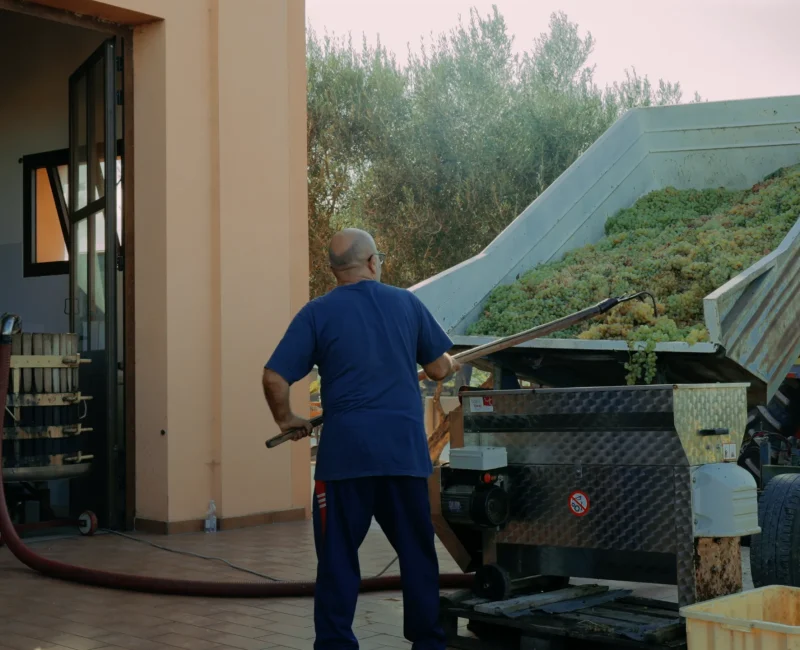
Once they arrive in the cellar, the grapes are processed through a destemmer, a machine that separates the stems from the berries.

The berries are then conveyed into the presses, where they are gently crushed to extract the must. In the past, manual wine presses were used, while today they have been complemented by hydraulic presses, which ensure greater efficiency without compromising quality.

The must obtained is then transferred into the cauldrons, ready for the most distinctive stage in the production of vino cotto.

foto di Andi
FRAMES 5_risultato
Vino Cotto

The Boiling Stage

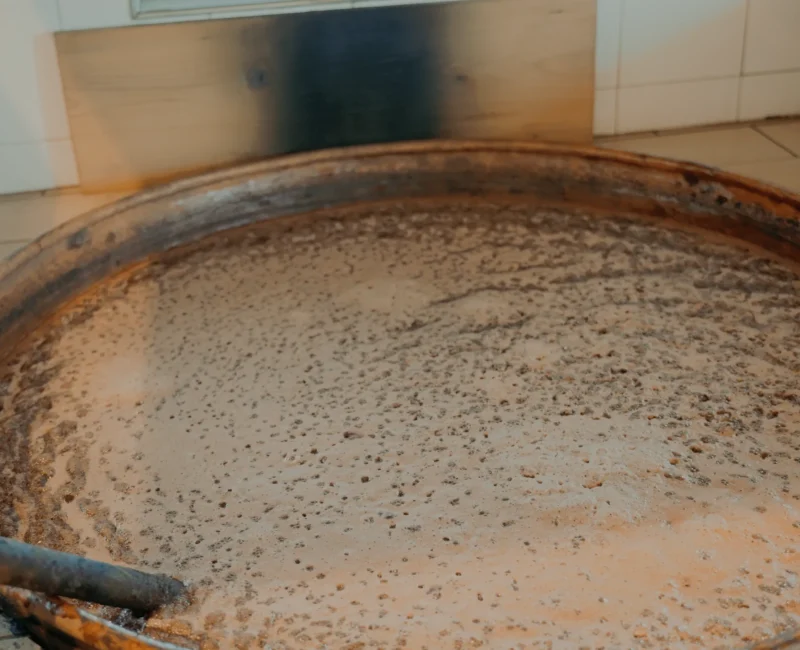
The boiling stage represents the heart of the vino cotto production process. The must is poured into large copper cauldrons, with capacities of 4.5, 5, and 7.5 hectolitres, and slowly cooked for at least 15–18 hours over an oak wood fire.

During this long stage, the liquid is reduced to 40–50% of its initial volume, concentrating aromas and sugars. Impurities rise to the surface and are manually removed using a traditional utensil called a “schiumarola”.

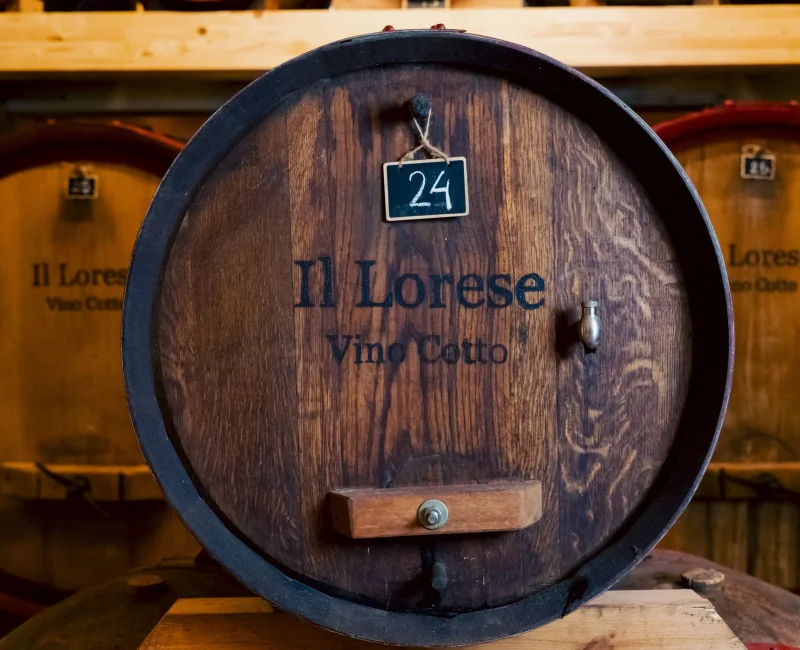
Once the right concentration has been reached, the vino cotto is transferred into 25-hectolitre barrels for ageing.

Vino Cotto

Ageing

The young wine is placed in wooden barrels, where the slow process of maturation and fermentation begins. Here, time takes centre stage: silence, patience, and care accompany every phase of its evolution.

Inside the oldest barrels lies what is known as “la madre” or “feccia”, a base of very old wine that helps give continuity and complexity to the final product, keeping the tradition alive.

IL LORESE - CANTINA-51_risultato
Gallery

Wine Production